

language support and localization
how spawnd handles multiple languages and how to localize your game for a global audience
platform language support
at the time of writing, spawnd's interface supports the following five languages:
- English (EN)
- LATAM Spanish (ES-LA)
- Brazilian Portuguese (PT-BR)
- Japanese (JA)
- Simplified Chinese (ZH-HANS)
all platform surfaces, including catalog pages, game detail pages, and embedded content, are available in these languages.
by default, spawnd automatically detects the user’s browser locale and applies the matching language. If no match is found, the interface defaults to English. Users can also change the language manually:
- via URL path:
append/en/,/es/,/pt/,/ja/, or/zh/to the site URL.
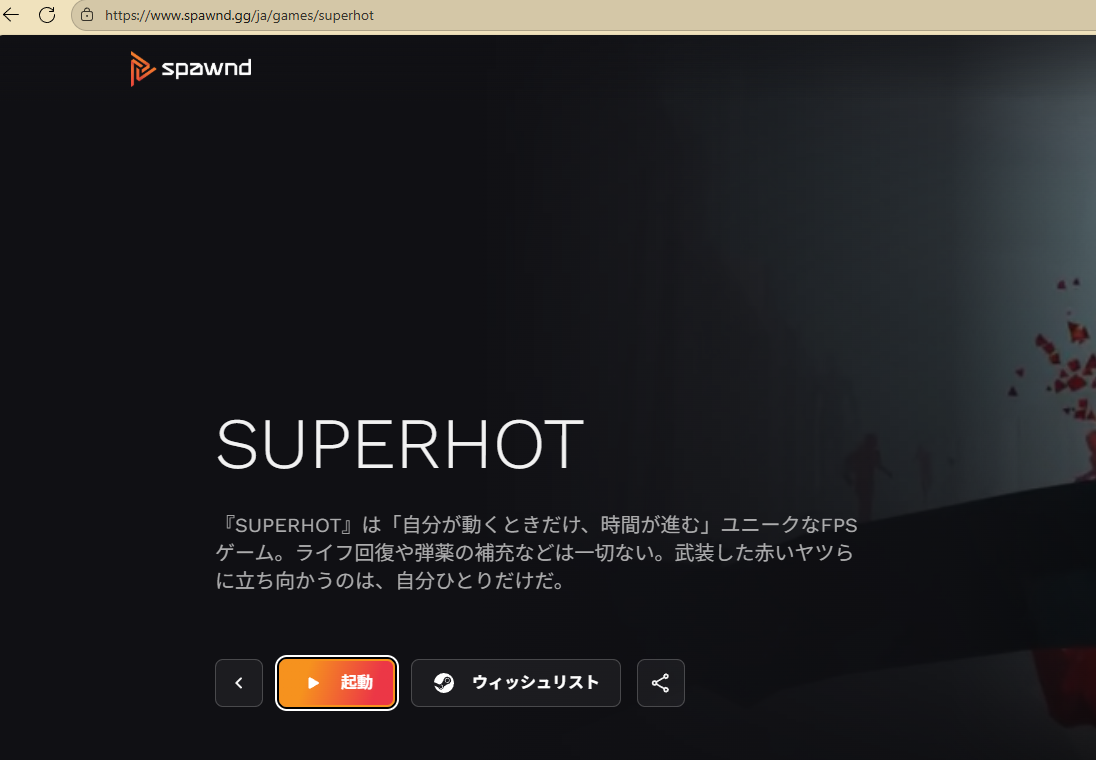
Example of a spawnd page being set to Japanese via URL
tip: by usung “/-/” in your game or embed URL, the language is automatically set to the users' own browser language. In case its an unsupported language, English will be used by default 😀
-
via language selector:
a dropdown menu is currently available in the site footer (location may change in the future).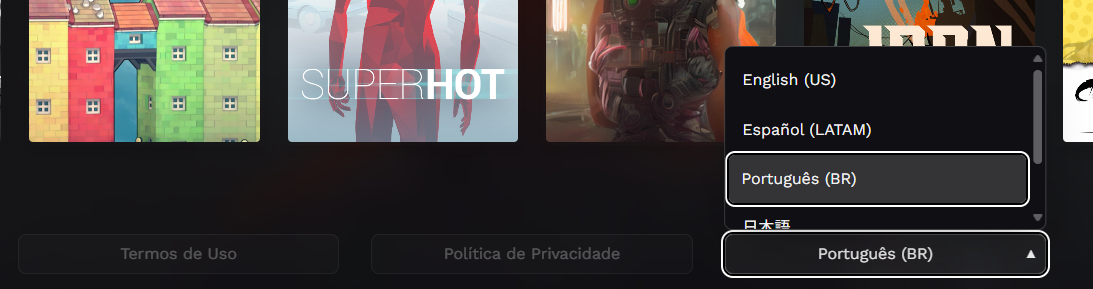
language dropdown menu in the footer (development screenshot)
game language support
additionally, the game details page displays which languages each game demo supports (covering all Steam-supported languages):
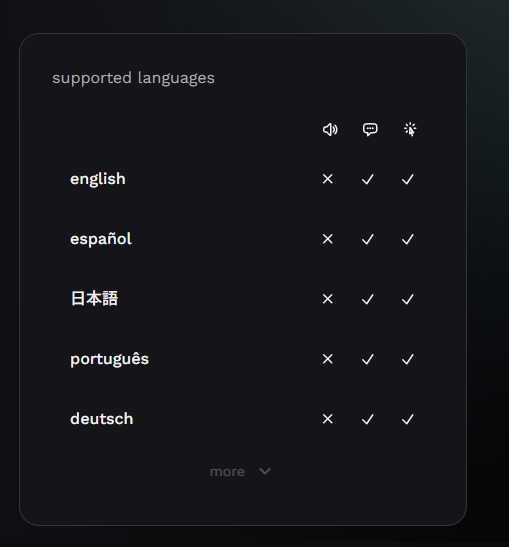
the sort order and rules of the supported languages is as below:
- *browser language: the user's OS/browser language (via browser's
navigator.language) - *website locale: the spawnd URL's locale the user is actively browsing in (e.g., /pt/, /en/)
- other spawnd-supported locales: remaining locales from ["en", "es", "pt", "ja", "zh"], including variants like zh-Hans, es-419
- all other languages: languages not yet supported by spawnd's interface
- empty locale: languages with no locale data, always last
*when browser language and website locale match, they collapse into a single group naturally (both resolve to first priority).
we believe democratizing access to games online means more than availability, it means adapting to local culture, customs, and language. more officially supported languages are planned for the future of spawnd – if you’d like to suggest one, please use our contact form!
localizing your game
while localization in languages other than English is not required for your game to be featured on spawnd (_see the Localization section in the Game Criteria, localizing your game is an excellent way to expand its reach and connect with broader audiences.
for developers interested in localization, here are a few recommended resources:
- IGDA Game Localization SIG Resources: the International Game Developers Association’s dedicated group with articles, best practices, and guides.
- Game Localization Handbook: a foundational book with detailed processes, terminology, and real-world examples.
- LocJAM: a recurring community game localization jam, where developers and translators practice on small games.
- I2 Localization (I2Loc) Unity Plugin: a powerful, full-featured localization plugin for Unity with Google Sheets integration, automatic translations, spreadsheet-driven workflows, and runtime language switching.
Updated 5 months ago